Imagine pointing your smartphone at a ancient, crumbling ruin and seeing it spring to life on your screen, fully restored to its former glory with citizens in period-appropriate clothing walking its streets. Envision a mechanic looking at a complex engine and seeing digital arrows and instructions overlaid directly onto the components, guiding them through a repair. Think of a surgeon visualizing a patient’s anatomy projected directly onto their body before making a single incision. This is not a glimpse into a distant science fiction future; this is the reality being built today through Augmented Reality (AR). The fusion of our physical world with dynamic digital information is fundamentally reshaping how we work, learn, play, and connect. The long-prophesied future of AR has not just been imagined it has officially arrived, and its integration into our daily lives is accelerating at a breathtaking pace.
A. Demystifying Augmented Reality: Beyond the Hype
Before diving into its profound applications, it’s crucial to understand what AR truly is. Often confused with its cousin, Virtual Reality (VR), AR operates on a fundamentally different principle.
-
Augmented Reality (AR) enhances your real-world environment by superimposing computer-generated perceptual information images, text, 3D models, animations, and video onto your view of reality. You still see and interact with the world around you; it is simply enriched with a digital layer. This is typically experienced through devices like smartphones, tablets, smart glasses, and heads-up displays (HUDs).
-
Virtual Reality (VR), by contrast, is immersive. It blocks out the physical world entirely and transports the user into a completely simulated, digital environment, usually through a fully enclosed headset.
The core magic of AR lies in its ability to contextualize information. Instead of searching for data on a separate screen, the data comes to you, placed perfectly within your context and field of view.
B. The Engine Room: Core Technologies Powering the AR Revolution
The seamless blending of digital and physical worlds is made possible by a sophisticated symphony of technologies working in concert.
A. Simultaneous Localization and Mapping (SLAM): This is the foundational technology that allows an AR device to understand its environment. SLAM algorithms enable a device to simultaneously map an unknown space (creating a digital understanding of the geometry of the room) and localize itself within that map in real-time. This is what allows a digital character to sit convincingly on your real-world coffee table without sliding off.
B. Depth Tracking and Scene Recognition: Sensors, such as LiDAR (Light Detection and Ranging) scanners found in newer smartphones and tablets, measure the distance to objects by illuminating them with laser light. This creates a precise depth map of the environment, allowing digital objects to occlude and be occluded by real-world objects, creating a believable sense of depth and interaction.
C. Advanced Processing and Computer Vision: The raw data from cameras and sensors is processed at incredible speeds using powerful processors and computer vision algorithms. These algorithms identify surfaces (horizontal planes like floors, vertical planes like walls), recognize objects (is that a chair? a face? a specific product?), and track motion, ensuring the digital overlays remain stable and locked in place.
D. Connectivity (5G and Wi-Fi 6): For complex, cloud-rendered AR experiences that offload heavy processing, high-speed, low-latency connectivity is non-negotiable. The rollout of 5G networks is a critical enabler, allowing for the streaming of high-fidelity AR content without lag, which would break the illusion of immersion.
C. Transforming Industries: The Professional Power of AR
While consumer apps get much of the attention, AR’s most significant and immediate impact is happening within enterprise and industrial sectors, solving real-world problems and driving efficiency.
A. Revolutionizing Manufacturing and Field Services: Companies like Boeing and Porsche use AR smart glasses to provide technicians with hands-free, step-by-step assembly instructions and wiring diagrams overlaid directly on the equipment they are building or repairing. This reduces errors, slashes training time, and improves efficiency by over 30%. A field engineer repairing a wind turbine can have a remote expert see what they see and annotate their field of view with arrows and notes, enabling complex repairs without requiring the expert to travel to the site.
B. Advancing Healthcare and Medicine: AR is a game-changer for medical professionals. Surgeons use AR projections to visualize CT scans and MRI data directly on a patient’s body, precisely guiding incisions and locating tumors. Medical students can practice procedures on detailed, interactive 3D holograms of human anatomy. AR is also used for vein visualization, making it easier to insert IVs, and for providing physical therapy patients with guided movement instructions.
C. Reshaping Retail and E-Commerce: The “try before you buy” dilemma of online shopping is being solved by AR. Apps from IKEA, Wayfair, and Amazon allow you to place true-to-scale 3D models of furniture directly in your living room to see how it fits and looks. Cosmetic companies like Sephora offer AR mirrors that let you virtually try on thousands of shades of lipstick and eyeshadow. This not only enhances customer confidence but also dramatically reduces return rates.
D. Innovating Architecture and Real Estate: Architects use AR to overlay their digital building models onto physical construction sites, allowing them to verify plans and identify potential issues before they become costly mistakes. Real estate agents can offer virtual tours where potential buyers can use their phones to see how a vacant space could look with different furniture arrangements or even view proposed renovation plans overlaid on the existing structure.
D. The Consumer Playground: AR in Everyday Life
The professional world is just one side of the coin. AR is increasingly weaving itself into the fabric of our daily consumer experiences.
A. Social Media Filters and Lenses: Platforms like Snapchat, Instagram, and TikTok have normalized AR for hundreds of millions of users through fun, engaging filters and lenses that add digital effects to selfies and videos. This has become a primary form of creative expression and communication for a generation.
B. Interactive Gaming and Entertainment: The global phenomenon of Pokémon GO provided the first mass-market taste of location-based AR gaming. This genre is expanding with games that turn your entire neighborhood into a playground. Furthermore, AR is enhancing live events sports fans at a stadium can point their phones at the field to see real-time player stats and replays overlaid on the action.
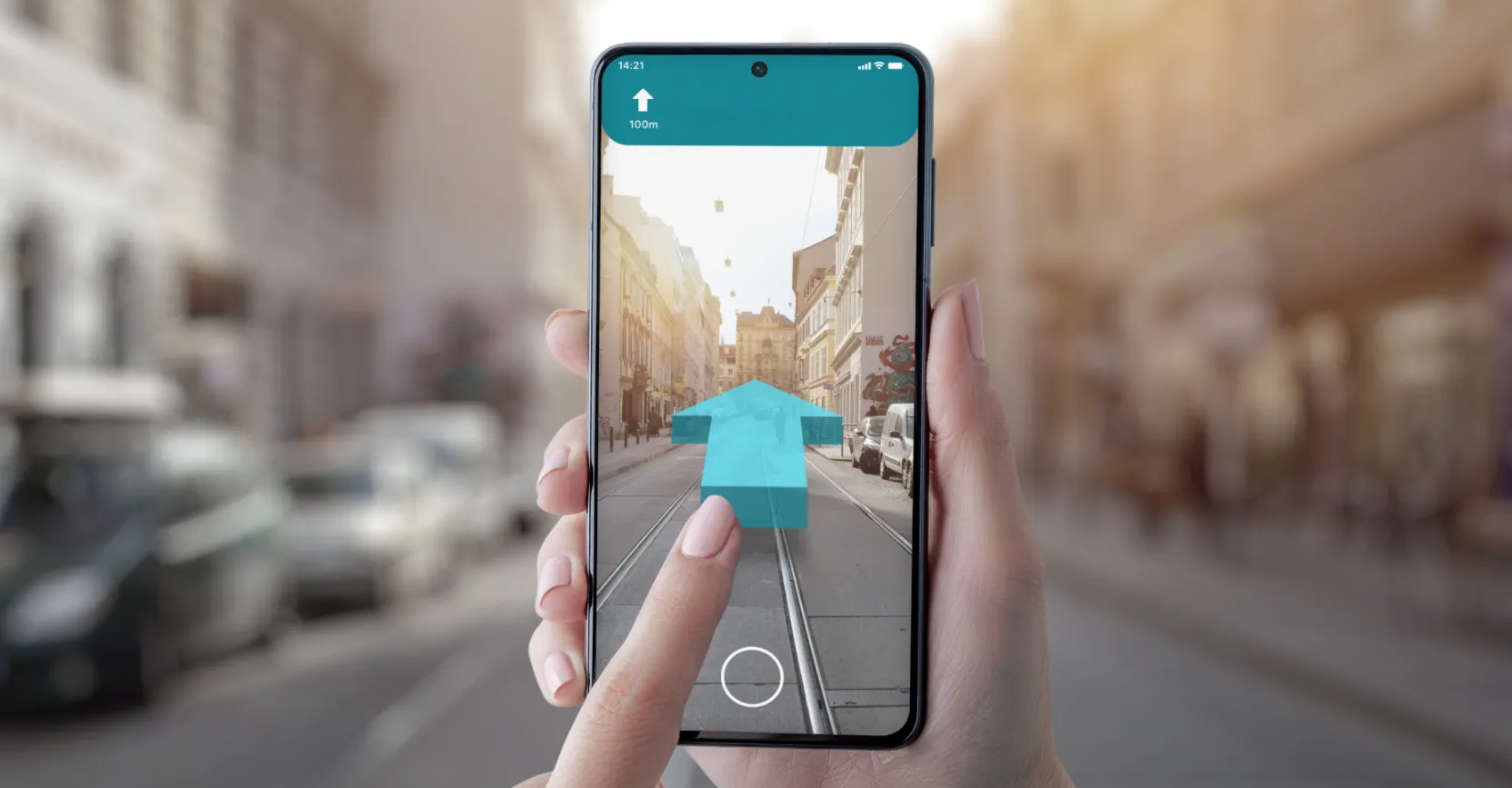
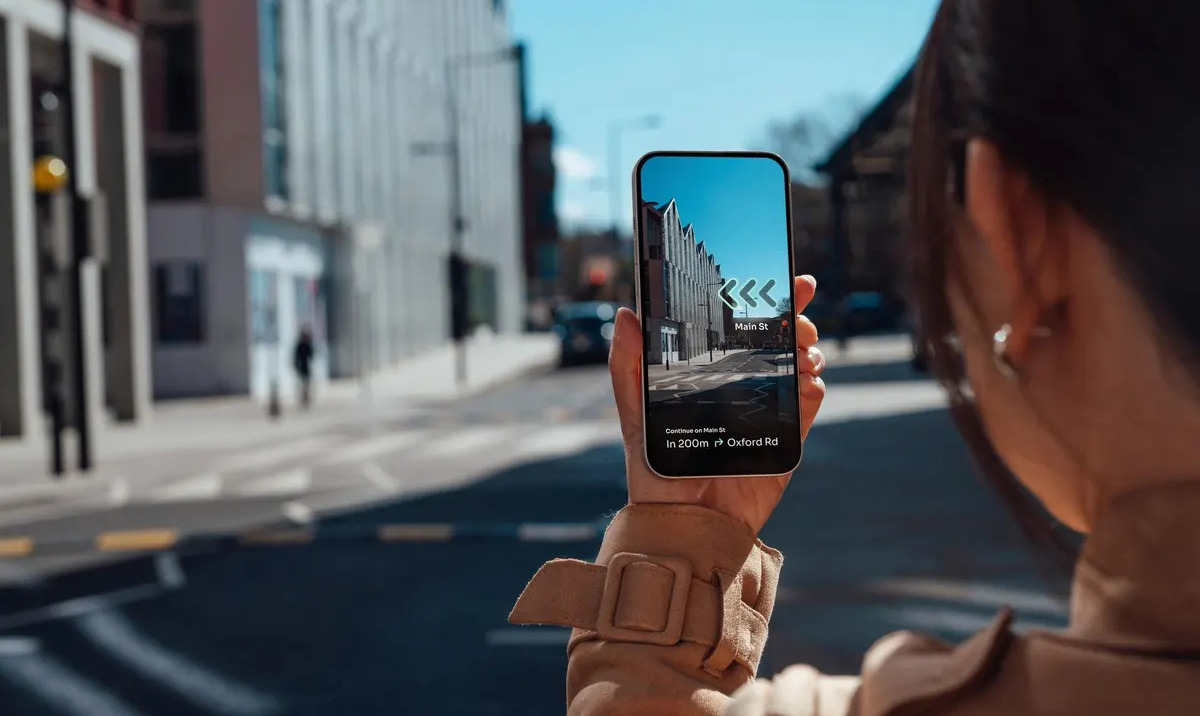
C. Navigation and Wayfinding: Forget looking down at a blue dot on a map. The next generation of navigation, like Google Live View and Apple’s equivalent, uses AR to overlay directional arrows, street names, and points of interest directly onto the live camera view of your surroundings. This creates an intuitive, heads-up guidance system that makes navigating complex urban environments or large airports effortless.
D. Education and Historical Exploration: AR brings learning to life. Textbooks can be augmented with 3D models of the solar system, beating human hearts, or historical artifacts. Museums are using AR to resurrect extinct animals, restore ancient artifacts to their original painted colors, and tell deeper stories about exhibits, creating an immersive and unforgettable educational experience.
E. On the Horizon: The Future Powered by AR Wearables
Currently, most AR experiences are funneled through smartphone screens. However, the true future the “killer app” for AR—lies in stylish, lightweight, and powerful wearable glasses.
A. The Quest for the Ultimate AR Glasses: Tech giants like Apple, Google, Meta, and Microsoft are in a fierce race to develop the first mainstream AR glasses. The challenges are significant: perfecting waveguide displays for a wide field of view, achieving all-day battery life, developing intuitive control systems (voice, gesture, touch), and creating a design that people will actually want to wear in public. The company that successfully cracks this code will unlock the next major computing platform, potentially replacing the smartphone.
B. The Spatial Web and Contextual Computing: AR glasses will be the primary interface for the “Spatial Web,” a future iteration of the internet where information is anchored to places and objects in the real world. Walking down a street, you could see restaurant reviews floating by their doors, get transit information at a bus stop, or receive translated subtitles for a foreign street sign all without ever taking a device out of your pocket. The world itself becomes the user interface.
C. Enhanced Social Connection and Telepresence: Future AR will revolutionize communication through lifelike avatars and holograms. Instead of a grid of faces on a video call, it could feel as if your colleague is sitting across the table from you as a photorealistic hologram, able to interact with shared 3D models. This sense of “telepresence” could make remote work and personal connections far more natural and effective.
F. Navigating the Challenges: Privacy, Safety, and the Digital Divide
With great power comes great responsibility. The widespread adoption of AR brings forth critical societal questions that must be addressed proactively.
A. Privacy in an Overlaid World: Always-on cameras and sensors scanning our environments continuously raise massive privacy concerns. Who has access to the video feed from my glasses? How is data about my home, my workplace, and my daily habits being collected, stored, and used? Robust regulations and transparent data policies will be essential to build public trust.
B. Safety and Digital Distraction: overlaying digital content onto the real world creates potential for distraction, especially in situations requiring full attention, like driving or walking near traffic. Developing context-aware systems that minimize risk and establishing new social etiquette for AR use in public spaces will be critical for safe integration.
C. The AR Accessibility Gap: There is a real risk that advanced AR technology could become a luxury, creating a new digital divide between those who can afford the latest wearables and access the best experiences and those who cannot. Ensuring that the benefits of AR are accessible and equitable is a challenge for developers and policymakers alike.
Conclusion: Embracing the Augmented Age
The journey of Augmented Reality is no longer a speculative path toward a distant future. It is a present-day reality, actively dismantling the barriers between the digital and the physical. From the factory floor to the operating room, from our living rooms to city streets, AR is demonstrating its immense power to enhance human capability, democratize information, and re-enchant the world around us. While challenges around privacy, hardware, and societal impact remain, the trajectory is clear. We are standing at the dawn of the Augmented Age. The tools to layer imagination onto our reality are here. It is now up to us developers, creators, policymakers, and users to shape this powerful technology into a force that amplifies our humanity, fosters connection, and builds a better, more informed, and more fascinating world for everyone.