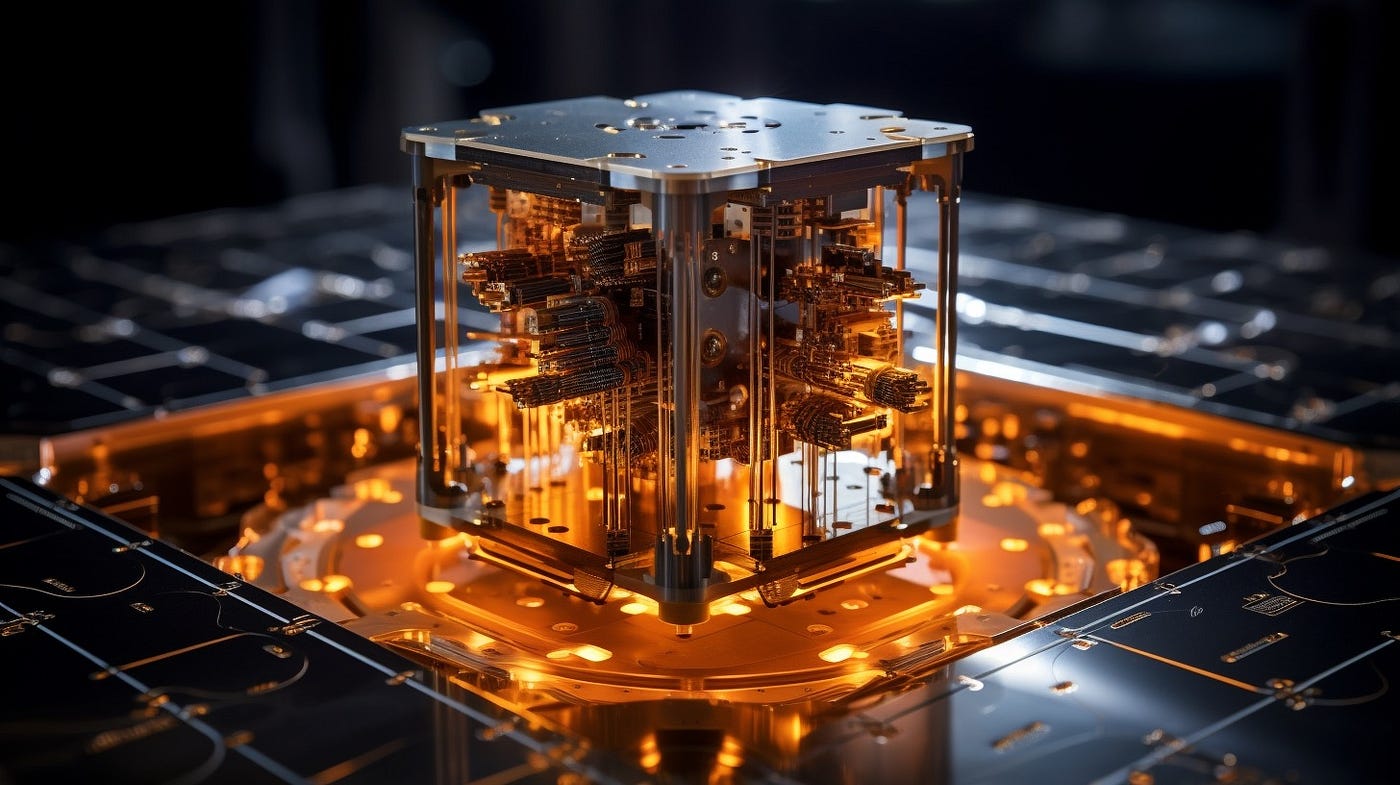
The digital landscape is on the precipice of a seismic shift, one that promises to redefine the very fabric of technology, society, and our understanding of computation itself. This shift is propelled by quantum computing, a field that moves beyond the binary constraints of classical computing to harness the bizarre and powerful laws of quantum mechanics. For content creators and publishers focused on Google AdSense revenue and SEO, understanding and writing about such transformative topics is crucial for attracting high-value, forward-thinking traffic. This article provides a comprehensive deep dive into the digital impact of quantum computing, exploring its fundamental principles, its groundbreaking applications, and the profound challenges and opportunities it presents.
A. From Bits to Qubits: The Fundamental Quantum Leap
To grasp the monumental potential of quantum computing, one must first understand the critical limitations of the classical computers we use today.
The Limits of Classical Computing: The Binary World
Classical computers, from smartphones to supercomputers, operate using bits. A bit is the most basic unit of data, and it can exist in one of two states: 0 or 1. Every app, website, video, and calculation is, at its core, a complex combination of millions or billions of these zeros and ones. This binary system has been the engine of the digital revolution for decades. However, when faced with certain types of problems especially those involving complexity, probability, and massive datasets this binary approach becomes incredibly inefficient and sometimes utterly impractical. Problems like simulating complex molecules for drug discovery or optimizing global logistics networks can cause even the most powerful supercomputers to grind for years.
The Quantum Advantage: Introducing the Qubit
Quantum computers transcend this binary limitation by using quantum bits, or qubits. Unlike a standard bit, a qubit is not confined to being just a 0 or a 1. Thanks to the quantum principle of superposition, a qubit can exist in a state where it is both 0 and 1 simultaneously. Imagine a sphere where the north pole is 1, the south pole is 0. A classical bit can only be at one pole. A qubit, however, can be at any point on the sphere. This ability to be in multiple states at once is the source of the quantum computer’s immense power.
Furthermore, qubits can be entangled. Entanglement is a mysterious quantum connection where two qubits become inextricably linked, regardless of the physical distance between them. The state of one entangled qubit instantly influences the state of the other. This allows quantum computers to process information in a massively parallel way, exploring a vast number of possibilities concurrently.
The power of a quantum computer grows exponentially with the number of qubits. While 2 classical bits can represent only one of four possible states (00, 01, 10, 11) at any time, 2 qubits in superposition can represent all four states at the same time. With 300 qubits, a quantum computer could, in theory, represent more states than there are atoms in the known universe. This is not merely an incremental improvement; it is a paradigm shift in computational capability.
B. Core Quantum Principles Powering the Revolution
The operation of a quantum computer is governed by a few key principles that seem counterintuitive but are fundamental to its power.
B.1. Superposition: The Power of “And”
As introduced, superposition allows a qubit to be in a combination of the 0 and 1 states. It’s the difference between a coin that has landed on either heads or tails (a classical bit) and a coin that is still spinning in the air, effectively being both heads and tails at once (a qubit). This is what enables quantum computers to perform many calculations simultaneously.
B.2. Entanglement: Spooky Action at a Distance
Albert Einstein famously called entanglement “spooky action at a distance.” It describes a powerful correlation between qubits. When qubits are entangled, measuring the state of one qubit immediately tells you the state of its partner, even if they are light-years apart. This phenomenon is crucial for quantum computing as it allows for the creation of complex, interdependent states that can be manipulated to perform intricate computations with incredible speed.
B.3. Quantum Interference: Steering Probability
Finally, quantum algorithms are designed to use interference. This involves manipulating the probability amplitudes of qubits (the likelihood of them collapsing to a 0 or a 1 when measured) to amplify the paths leading to the correct answer and cancel out the paths leading to wrong answers. Think of it like using noise-canceling headphones for computation: the algorithm cancels out the computational “noise” and leaves only the clear signal of the solution.
C. Transformative Applications Reshaping Industries
The unique capabilities of quantum computers will unlock solutions to problems previously considered unsolvable. Their impact will be felt across every major sector.
C.1. Cryptography and Cybersecurity: The Breaking and Making of Codes
This is perhaps the most widely discussed and immediate impact. Most modern encryption, including the RSA protocol that secures online transactions, emails, and sensitive data, relies on the extreme difficulty for classical computers to factor large numbers into primes. A powerful enough quantum computer running Shor’s algorithm could break this encryption in hours or days, rendering current cybersecurity protocols obsolete.
However, quantum technology also offers a solution: quantum cryptography. Quantum Key Distribution (QKD), for instance, uses the principles of quantum mechanics to create secure communication channels. Any attempt to eavesdrop on a quantum-encrypted message would disturb the quantum state of the particles being used, alerting the users to the breach. This will lead to a new era of “post-quantum cryptography,” creating a massive field for development and discussion.
C.2. Drug Discovery and Materials Science: Designing at the Atomic Level
Developing a new drug or material is a process of trial and error that can take over a decade and cost billions of dollars. This is because simulating a single molecule to understand its behavior and interactions is astronomically complex for classical computers. A molecule is a quantum system itself, and accurately modeling it requires a quantum computer.
Quantum computers will allow scientists to precisely simulate molecular and atomic interactions. This will dramatically accelerate the design of new pharmaceuticals, personalized medicines, more efficient batteries, superconductors that work at room temperature, and stronger, lighter materials for manufacturing. The potential to solve human health and energy crises is staggering.
C.3. Optimization: Solving Logistical Nightmares
Countless global industries are hamstrung by optimization problems. These include:
-
Logistics: Finding the most efficient routes for thousands of delivery vehicles (the “traveling salesman” problem on a massive scale).
-
Finance: Optimizing trading strategies, managing risk in incredibly complex portfolios, and detecting fraud patterns.
-
Manufacturing: Streamlining supply chains and factory floor production schedules.
-
Energy Management: Optimizing the load and distribution across national power grids to maximize efficiency.
Quantum algorithms are inherently suited to navigating these vast combinatorial landscapes to find the absolute best solution, potentially saving industries trillions of dollars annually.
C.4. Artificial Intelligence and Machine Learning: The Next AI Leap
AI and machine learning thrive on data. Training complex models involves processing and finding patterns in enormous datasets, a computationally intensive task. Quantum computing can supercharge this process. Quantum machine learning (QML) algorithms could analyze data in ways that are impossible for classical computers, leading to faster training times, more accurate models, and the discovery of deeper, more subtle patterns. This could lead to massive breakthroughs in natural language processing, computer vision, and predictive analytics, pushing the field of AI into a new dimension.
C.5. Climate Change and Environmental Modeling
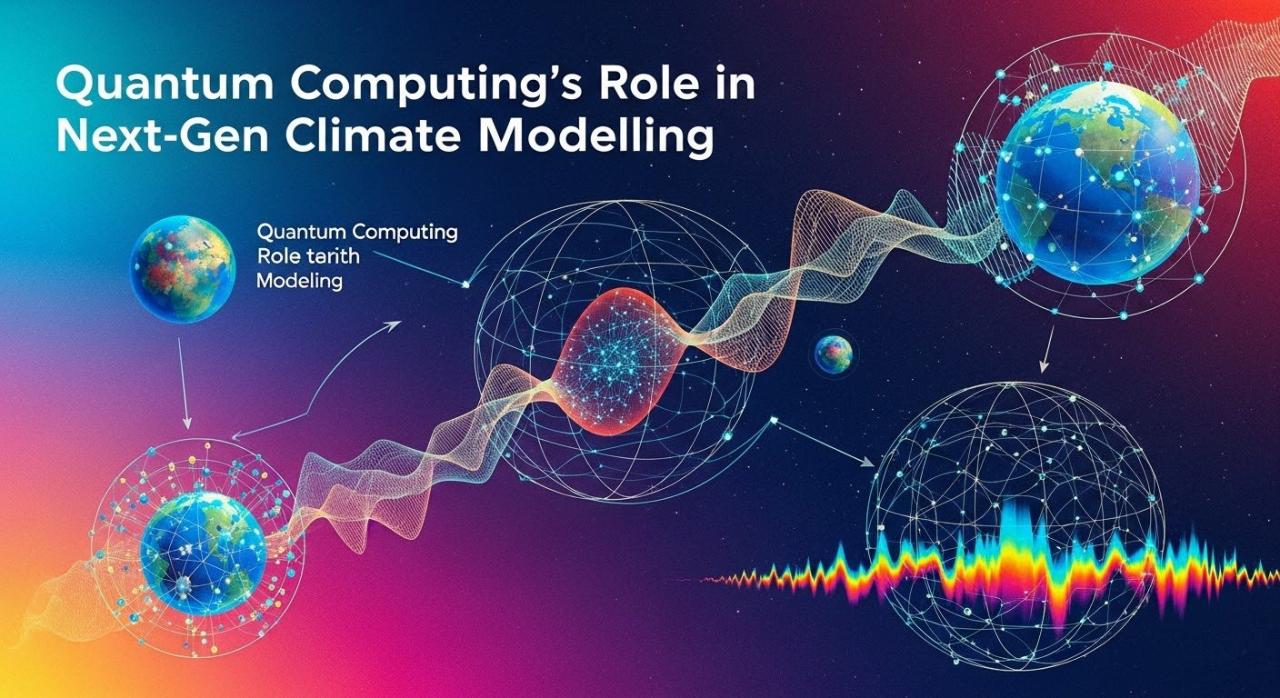
Understanding and mitigating climate change requires modeling incredibly complex environmental systems the atmosphere, oceans, and biosphere with all their interdependent variables. Our current models, while advanced, have limitations. Quantum computers could run far more detailed and accurate simulations of climate patterns, allowing for better predictions of extreme weather events. They could also accelerate the discovery of new catalysts for carbon capture, helping us to directly remove CO2 from the atmosphere more efficiently.
D. The Current State: Beyond Quantum Supremacy
The field has moved from theoretical speculation to tangible, albeit early, reality.
D.1. Achieving Quantum Supremacy
In 2019, Google’s Sycamore processor claimed “quantum supremacy” by performing a specific, esoteric calculation in 200 seconds that would have taken the world’s fastest supercomputer approximately 10,000 years. This was a landmark moment, proving that quantum computers could indeed outperform classical machines on certain tasks. Since then, IBM, IonQ, Rigetti, and others have made significant strides, increasing qubit counts and improving fidelity (reducing error rates).
D.2. The Challenge of Decoherence and Error Correction
The greatest hurdle remains decoherence. Qubits are extremely fragile. Their delicate quantum state can be easily destroyed by the slightest interference from the outside environment a stray photon, a vibration, or a change in temperature. This introduces errors into calculations.
Solving this requires sophisticated quantum error correction (QEC) codes, which use many physical “noisy” qubits to create one stable “logical” qubit. This overhead is immense; it might require thousands of physical qubits to support a single logical qubit, meaning we will need machines with hundreds of thousands of qubits before we see widespread, fault-tolerant quantum computing. Current research is focused on building these systems and developing more resilient qubit technologies, such as topological qubits.
E. The SEO and Content Creation Opportunity
For website owners and content creators, the rise of quantum computing represents a golden opportunity. This is a complex, rapidly evolving topic that attracts a highly educated and engaged audience a demographic that is incredibly valuable to advertisers.
E.1. Targeting High-Value Keywords and Traffic
By creating comprehensive, authoritative content on quantum computing, you can rank for high-intent keywords like:
-
“What is quantum computing?”
-
“Quantum computing applications”
-
“Quantum vs classical computing”
-
“Quantum cryptography explained”
-
“Impact of quantum computing on AI”
Users searching for these terms are often professionals, students, researchers, and tech enthusiasts. This traffic is highly valuable for Google AdSense, as ads placed on these pages are likely to be for enterprise software, online courses, tech products, and financial services, which command higher CPC (Cost-Per-Click) rates.
E.2. Establishing Authority and E-A-T
Google’s algorithms prioritize Expertise, Authoritativeness, and Trustworthiness (E-A-T). Producing well-researched, accurate, and in-depth content on a complex subject like quantum computing signals to Google that your site is a quality resource. This can improve your search rankings across all topics and build a loyal reader base that trusts your insight into cutting-edge technologies.
E.3. Future-Proofing Your Content Strategy
Quantum computing is not a fleeting trend. It is a foundational technology that will generate news, breakthroughs, and debates for decades to come. By building a library of content on this topic now, you position your website as a go-to resource, ensuring a steady stream of organic traffic as public interest and search volume continue to grow exponentially.
F. Preparing for a Quantum Future: A Societal Imperative
The arrival of fault-tolerant quantum computing will be a disruptive event on par with the invention of the internet or the silicon chip. Preparation is key.
F.1. The Urgent Need for Post-Quantum Cryptography
Governments and corporations must begin the long process of migrating their sensitive systems to quantum-resistant encryption algorithms. The U.S. National Institute of Standards and Technology (NIST) is already evaluating and standardizing these post-quantum cryptographic protocols. This transition will take years and requires widespread awareness and education.
F.2. Building a Quantum-Ready Workforce
There is a significant and growing skills gap in the quantum field. We need not only quantum physicists but also quantum software developers, algorithm designers, and engineers. Educational institutions and training programs must adapt to prepare the next generation for a quantum-augmented job market.
F.3. Ethical Considerations and Governance
As with any powerful technology, quantum computing raises important ethical questions. Who will have access to this technology? How can it be regulated to prevent its misuse? How will its economic benefits and disruptions be distributed fairly? These conversations must happen in parallel with the technical development to ensure quantum computing benefits all of humanity.
Conclusion: Embracing the Quantum Horizon
Quantum computing is far more than a faster computer; it is a new tool for understanding and manipulating the universe at its most fundamental level. Its digital impact will be all-encompassing, breaking barriers in science, medicine, finance, and security that have persisted for generations. While significant technical challenges remain, the pace of progress is accelerating. For everyone, from scientists and CEOs to content creators and students, the time to understand, discuss, and prepare for the quantum future is now. By engaging with this topic today, we can help shape a tomorrow where quantum computing solves some of humanity’s most pressing challenges and unlocks a new era of discovery and prosperity.